
Keep more of every trip.
Pulse cuts duplicate billing work, finds trips that fit open time and applies the same settlement rules every time.
For independent bases in New York and New Jersey. No slides.
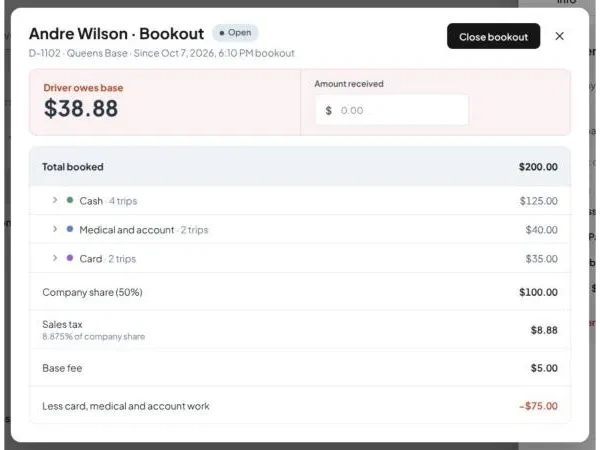
- 1Cash settled at the bookout
- 2Trips grouped by payment type
- Per completed tripbilled monthly
- No setup feeand no monthly minimum
- 2 to 3 daysto switch
- New York and New Jerseybases
Margin is lost in the gaps between systems.
A trip is entered again for billing. A driver has open time that dispatch cannot fill. A settlement is rebuilt by hand.
Pulse brings these tasks into one workflow. Your team spends less time reconciling the day.
Less duplicate entry
Claims start from the dispatch record.
Open time looked at
Pulse looks for trips that fit.
Settlement that follows rules
Pay rules and bookouts work the same way each time.
Pulse protects the margin on every trip.
Create the trip once
The trip you dispatch is the trip you bill. It stays one record from dispatch to claim. Nothing is entered twice, and billing starts from the same data dispatch used.
Fill open time
Auto gap insertion looks for trips that fit a driver’s available time. A driver with a gap between trips can take work that fits it. More of the day is paid time.
Offer the next trip
Auto Trip Offer sends trip offers to the driver’s phone, including while a trip is under way. The driver accepts in the app. Dispatch does not have to call around to cover the next trip.
Handle no-shows
When a passenger replies Not Going, the trip cancels and the sender is told. The contract’s own waiting time decides what counts as a no-show. The decision follows the contract, not a guess on the day.
Bill from the record
Submit Medicaid claims to eMedNY through Pulse. Broker billing follows each broker’s process. Pulse exports the TLC trip record file ready to submit.
Settle cleanly
Apply the pay rules you set once. Flagged trips stay out of the pay run until your team reviews them. Bookouts settle cash work with each driver, line by line.
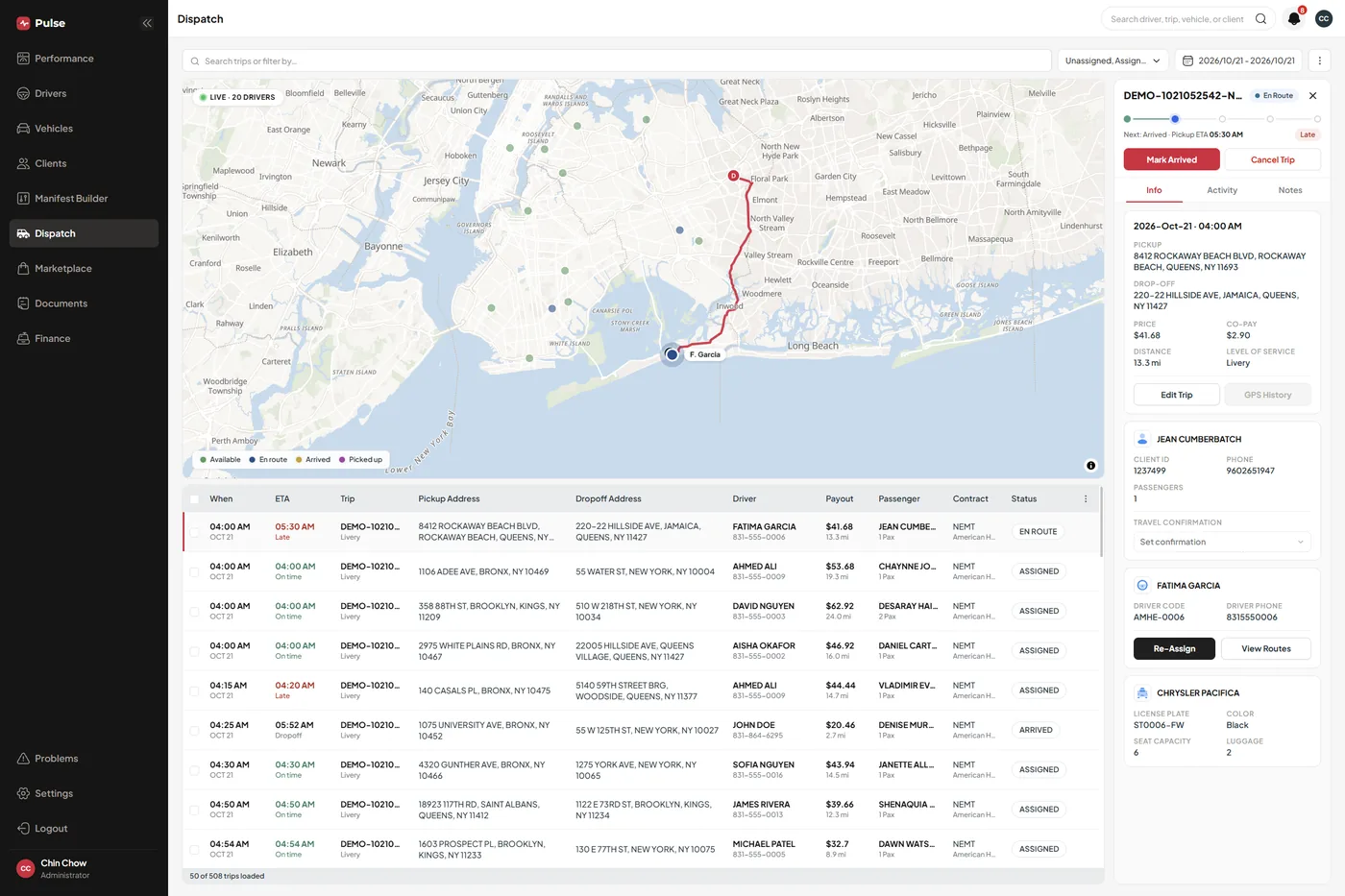
Pulse dispatch board with map, trip list and trip detail. Demo data.
What happens on the call
- We look at where your team enters trips more than once.
- We look at gaps in the day and what holds up settlement.
- We go over the 2 to 3 day switch and how pricing works.
Pulse applies these rules every day.
Built by people who ran a base.
- 20 yearsin NEMT and cash-pay transportation
- 100M+trips of history
- 2 to 3 daysto switch
Billing without retyping
One trip, one record, one claim.
Vehicles that keep earning
Open time gets looked at for a trip that fits.
No-shows that follow a rule
The contract sets the wait, not an argument.
A switch measured in days
We move your data in 2 to 3 days.
Before you schedule
Does Pulse submit claims to every broker?
Pulse submits Medicaid claims to eMedNY. Broker billing follows each broker’s process. We review your contracts on the call.
How does Pulse find trips for open time?
Auto gap insertion looks for a suitable trip. Auto Trip Offer then sends the offer to the driver. The dispatcher can approve or override every offer.
Can we prepare the TLC trip record file?
Pulse exports a TLC trip record file for submission.
How long does switching take?
About 2 to 3 days. We move your data.
Will my drivers use the app?
Yes. One driver account covers every company a driver works for, so your drivers may already be on Pulse. While they run your trips, they work for you.
How does pricing work?
Pulse is charged per completed trip and billed monthly. There is no setup fee and no monthly minimum. We go through your volume on the call.
See where Pulse can cut the work between dispatch and payment.
Bring your current workflow. We walk through a relevant example with sample data.
Prefer to talk now? (212) 555-0142
Pulse supports the modernization of the independent base.